The time has come for me to do the first engine start on the plane. In preparation of the inspection, its always good to do an engine run to catch anything early before the inspection and first flight.

I pulled the plane out and parked it into the wind with the cowl off. I had some of my family members there to be the ground crew, and briefed them on the plan. It was going to be a short few minutes running at 1000 rpm with a brief bump up to 1500 to cycle the prop a few times and verify all the systems.

With the plan in place I hopped in the plane and began my checklist. Master switch > BATT. Let the pilot’s side display power on. Starter Enable > ON . Mixture > RICH. Throttle > OPEN 1/4″. Boost Pump > ON until pressure rises, then OFF. Mixture > IDLE CUTOFF.
I shouted “Clear Prop” and cranked the engine. it turned over nicely, sounded great, but it did not start. I tried the boost pump again and saw fuel pressure, tried cranking again, but nothing. I decided to rerun through my checklist. I had missed a crucial step…turning the ignitions on! I took a note to fix my checklist for next time.
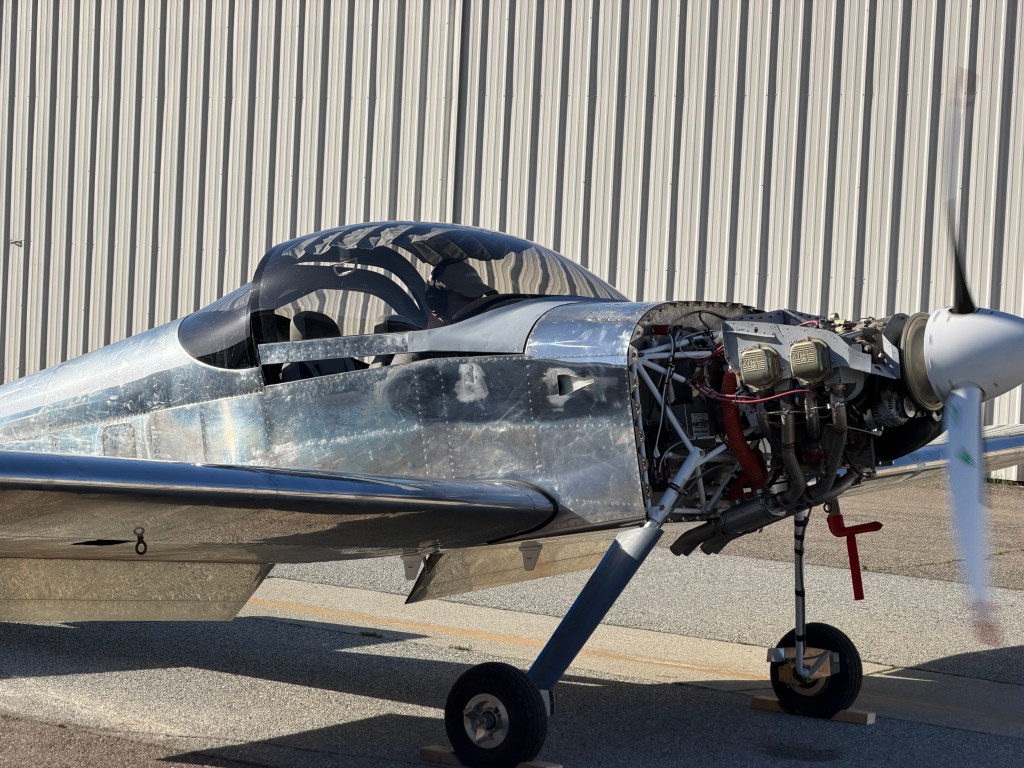
I turned the ignitions on, set the throttle and mixture, and hit the starter. It fired right up in less than one rotation!

I let the engine idle for a second, checking all my instruments, I did smell a faint bit of fuel, but with the canopy cracked open and the failed starts I didn’t think too much, and once it started the smell faded.
I let the engine oil heat up while idling, keeping my eyes on the exhaust gas temps (EGT) and the cylinder head temps (CHT) to make sure they stayed within acceptable parameters. My limit for the CHTs was < 350F, then I would shutdown and let things cool off.
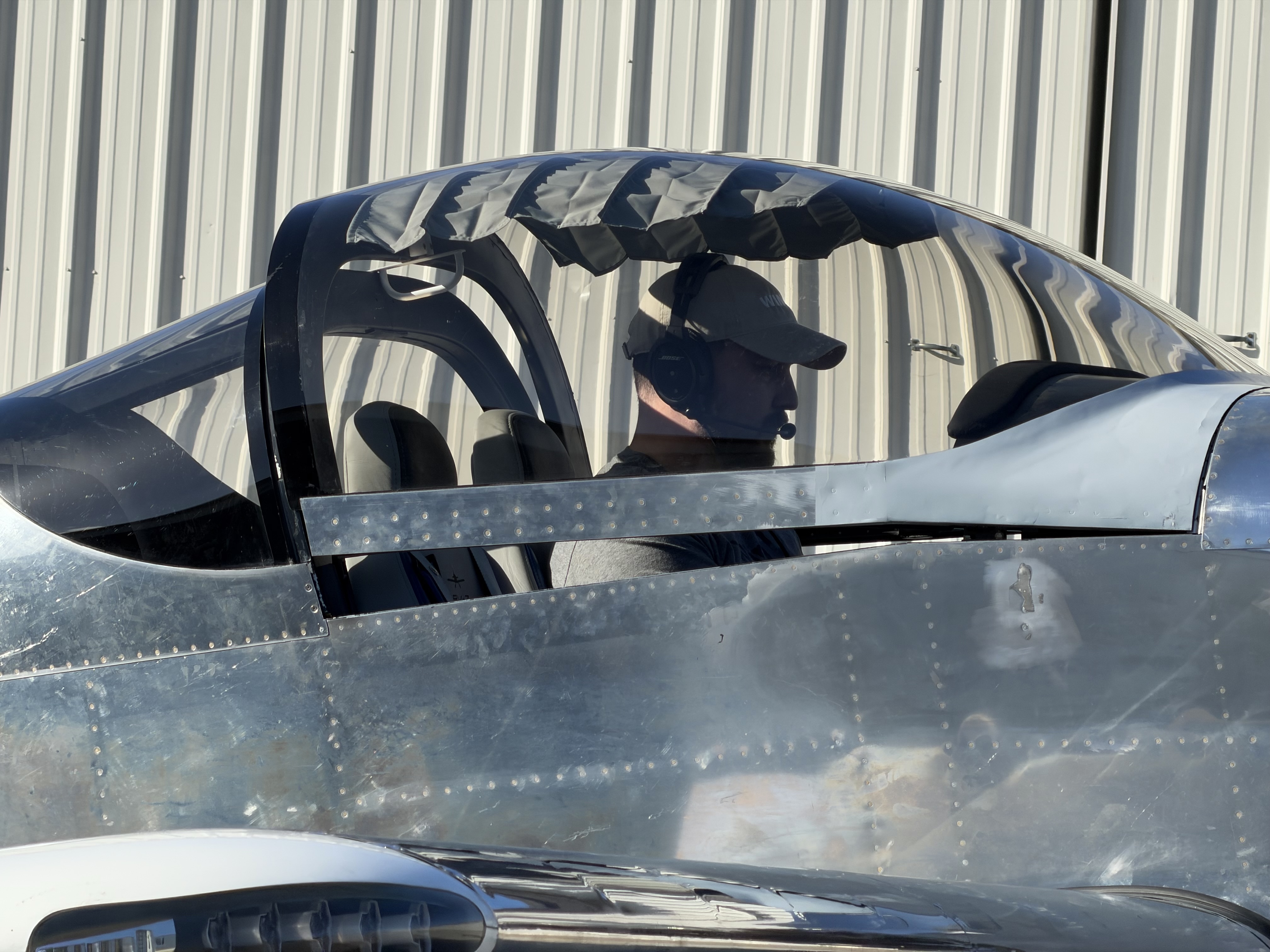
I also realized ~ 3 minutes into the run, that I failed to turn the alternator on. I switched the master > BATT + ALT and the alternator immediately started charging the battery. Voltage and current stabilized right around where I had expected, and the system was behaving.

I bumped the throttle up to 1500 RPM and cycled the prop a few times seeing a ~100 rpm drop or so (per the engine manufacturing break-in procedure ground run guidance), and verified oil pressure to the prop was working.
At this point with the CHTs creeping up towards 300F and all other temps and pressures in the green, I decided to shutdown.
I switched to my shutdown checklist, and got the plane all shutdown successfully!

The Takeaways
There were two things I noticed immediately after getting out, 1. I had an oil leak somewhere, and 2. I had a small fuel leak.
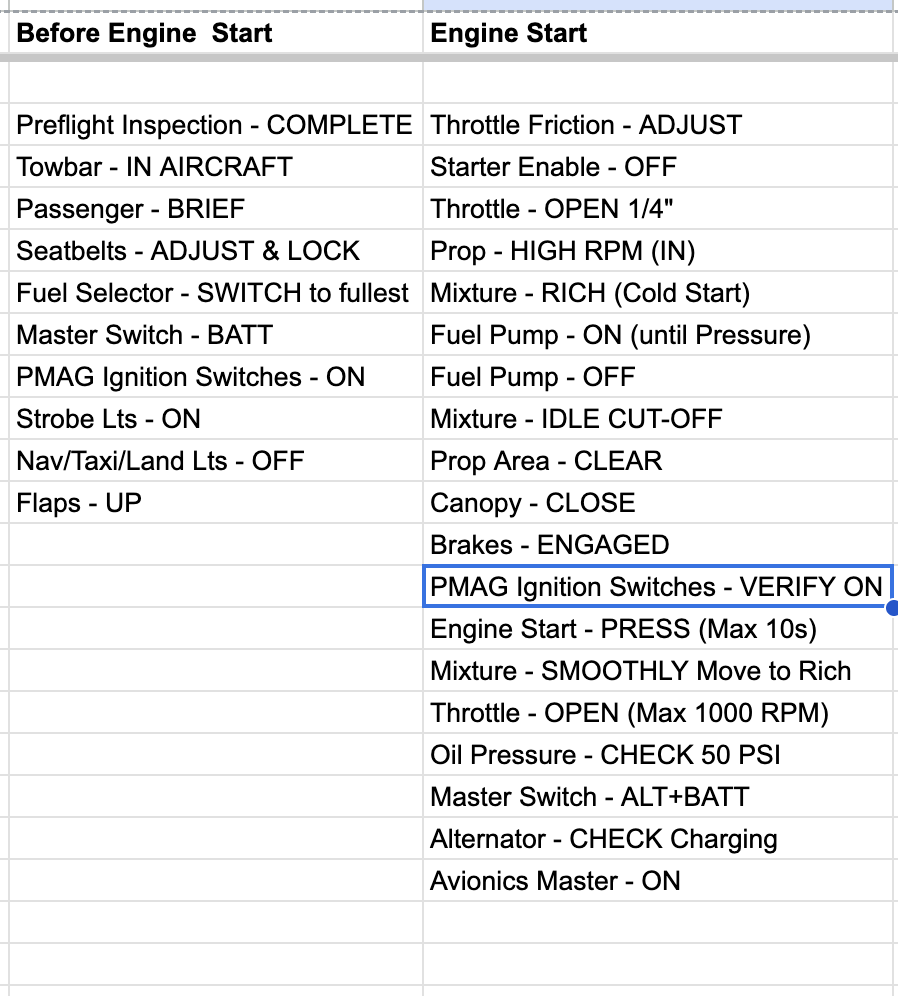
After the engine had cooled sufficiently I rolled the plane back into the hangar and began my debrief. The first thing I did was modify my “Engine Start” checklist to add a line: PMAG Ignition Switches – VERIFY ON. The reason for just verifying is that on my “Before Engine Start” checklist, I have PMAG Ignition Switches – ON, but somehow missed it when I got to the “Engine Start” Checklist.
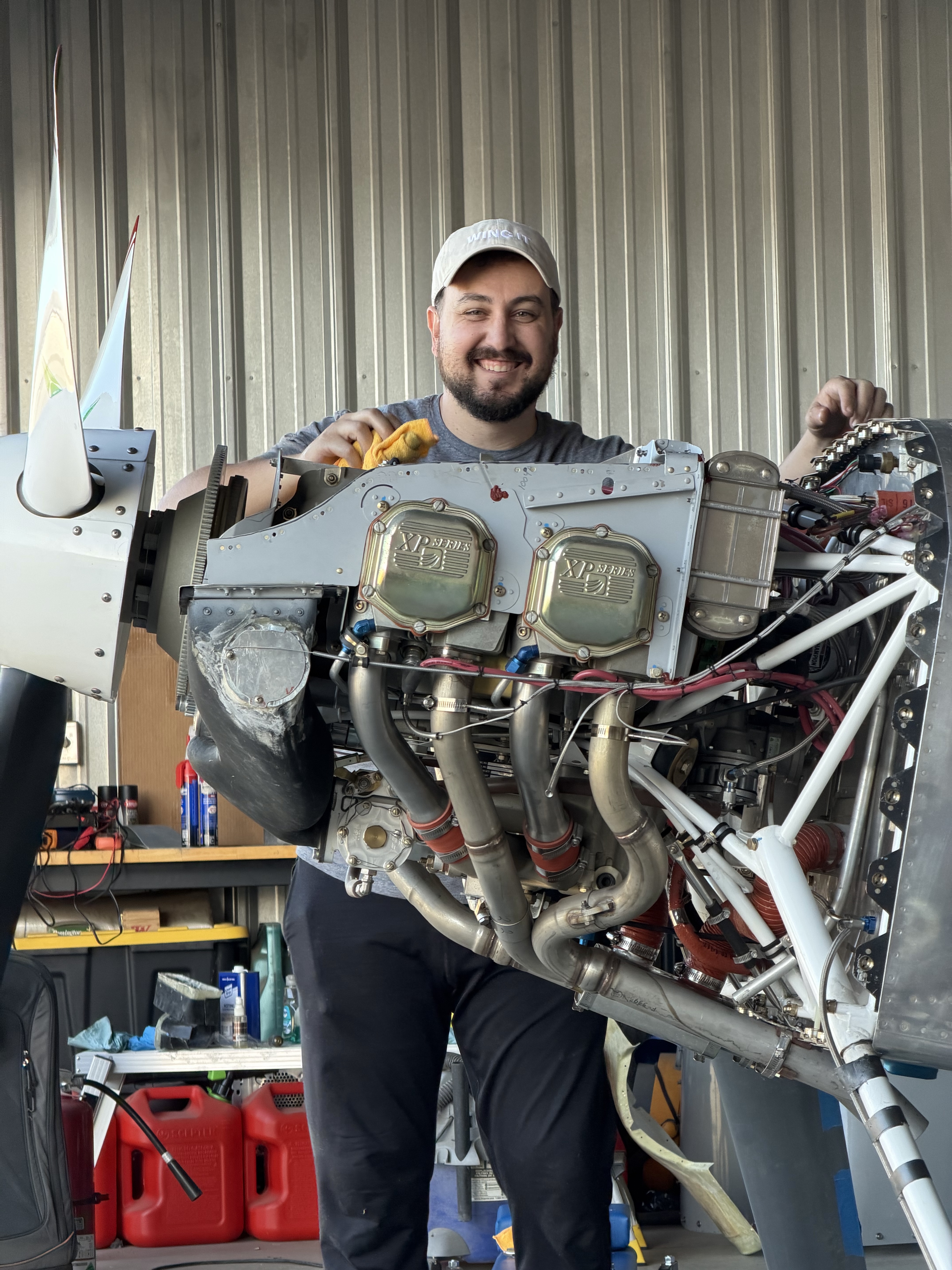
For the oil leak, I decide to first wipe the engine off as much as I could to see if I can trace back to the source. I immediately found a loose hose fitting on the engine that goes to the oil pressure sensor. I torqued it and marked it with torque paint. I decided to look over each connection on the engine and found two more that were slightly loose, the Oil Temperature probe, and the Oil Cooler return line were both not torqued properly. Quick fixes for both of them.
I decided to check for that fuel leak, and when I walked back to the cabin and opened the canopy I smelled a strong scent of fuel. I went through each of the connections from the fuel selector valve to the fuel pump to the firewall, and found two loose fittings from the outlet of the boost pump, and the fitting on the firewall. Luckily they were small and didnt end up leaking too much fuel, but that could have been really bad. Again I torqued each fitting and rechecked all the rest, turned on the boost pump again, and no visible leaks, and no smells.
Conclusion
All in all, I think it went really well. Finding a few things to take care of after many years of building is no surprise. Now that the obvious issues have been found and corrected, it will be good to do another ground run to fully verify all the fixes. I have a few more tests to do including getting up to full power for a short burst to verify I achieve the target 2700 RPM, and then the plane will be ready for the first flight.


 RV-7 N890GF
Leave a reply to Matthieu Capuano Cancel reply